By Christian Thibaudeau
Fred Hatfield, known as Dr. Squat due to his doctorate in exercise psychology and his legendary strength (1015 lbs squat at 45 years old), was one of the key figures in developing the science of powerlifting training.
He was among the first to apply scientific principles to strength training, including periodization, recovery management, the balance between heavy and hypertrophy work, and proper nutrition.
One of his most useful—but lesser-known—contributions was this:
He recommended training most of the year using less mechanically advantageous variations of the competition lifts, only switching to the competition lifts themselves during the pre-competition phase.
Powerlifting vs Muscle-Building
The goal of powerlifting is to move the most weight possible.
But the technique that allows you to lift the most weight is not the same as the one that builds the most muscle.
To maximize weight, you use the most efficient leverages possible—shortening range of motion and staying in mechanically strong positions.
To maximize muscle growth, you want the opposite: more range of motion, more stretch under load, and more work done by the target muscles.
For example, in the squat:
- Powerlifting style: lower bar, wider stance, more hip hinge, less knee flexion
- Hypertrophy style: higher bar, narrower stance, more upright torso, deeper knee bend
In the bench press:
- Max strength: large arch, wide grip, shorter bar path
- Muscle growth: closer grip, less arch, longer range of motion
In the deadlift:
- Max strength: sumo stance or efficient conventional setup
- Muscle growth: RDL, stiff-leg, deficit, or snatch-grip variations
The Hatfield Approach
Hatfield’s method was simple:
Train with movements that maximize range of motion and muscle recruitment for most of the year, then switch to competition lifts about 12 weeks before a meet.
Examples of variations he used:
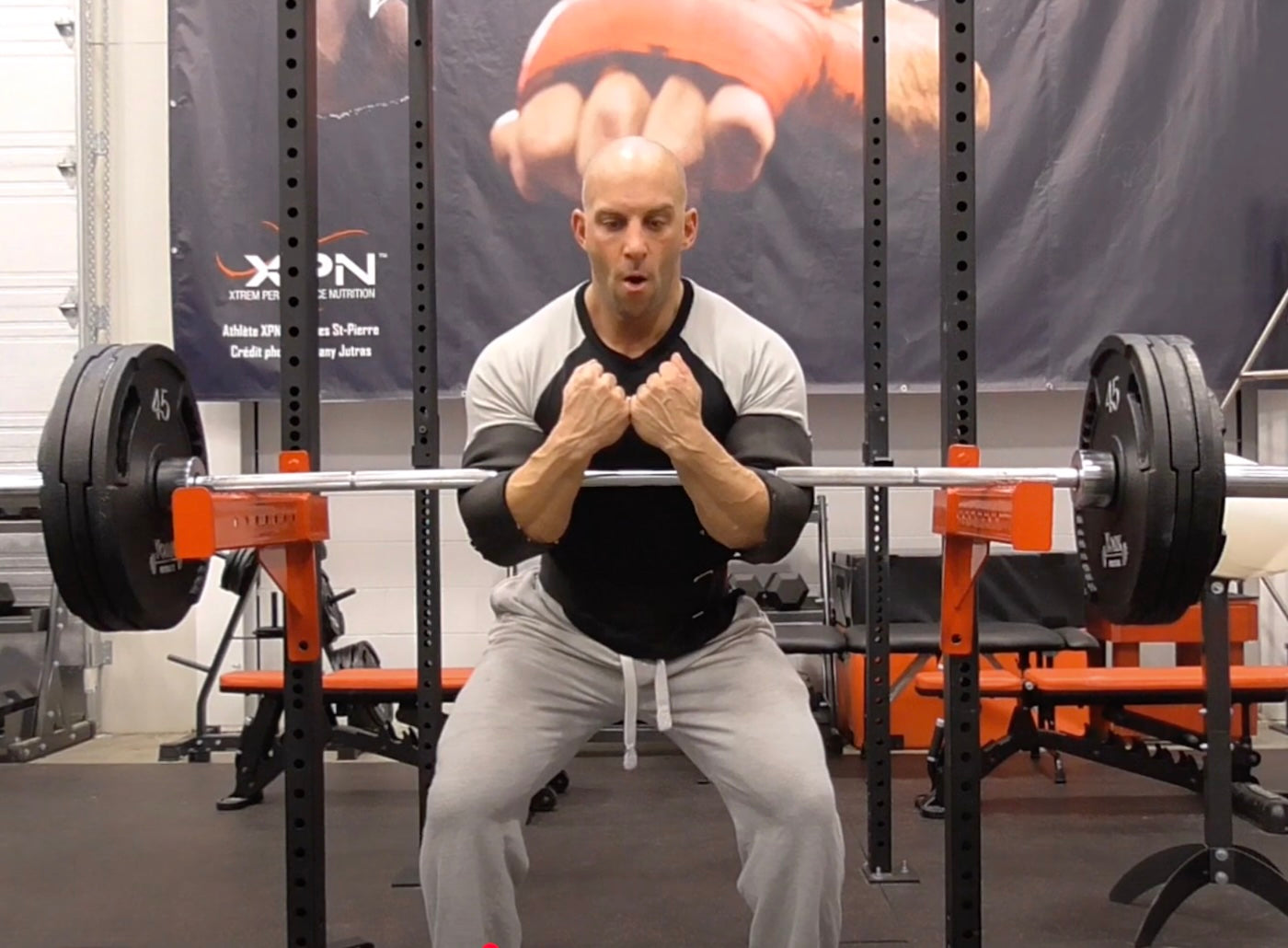
- Squat: High-bar squat, front squat, or safety bar squat
- Bench: Close-grip bench, incline bench, or curved bar bench
- Deadlift: Romanian deadlift, deficit deadlift, snatch-grip deadlift
Typically, one variation per lift would be used for an entire training cycle.
The goal: get as strong as possible for sets of 5.
Benefits of This Approach
More Muscle Growth
These variations increase range of motion and stretch under load, leading to better hypertrophy.
Stronger Supporting Muscles
Greater range of motion forces more work from stabilizers and synergists, improving overall strength.
Reduced Injury Risk
Lighter loads and better control reduce stress on joints and decrease injury risk.
Less Mental Burnout
Rotating variations prevents psychological fatigue and reduces pressure to constantly perform at max levels.
Conclusion
Hatfield’s approach was decades ahead of its time.
By focusing on building muscle, improving joint stability, and managing fatigue, he created a system that develops both strength and longevity.
Instead of constantly chasing heavier weights in competition lifts, the focus is on preparing the body to handle them when it matters most.
For any lifter seeking long-term progress, resilience, and peak performance, these principles remain as valuable today as ever.