By Christian Thibaudeau
If you’ve been following the current training trends on social media you’ve probably hear how machines are superior to free-weights when it comes to hypertrophy. History and real-life results pretty much demonstrate that it’s bullshit, but the younger generation, which prefers comfort over effort, are simply too happy to find a justification for using the easier machines and cables over the rugged barbell.
In this article I’ll explain to you why the theory that machines are better than free-weights just isn’t true and why free-weight exercises should comprise the bulk of your program.
THE THEORY BEHIND THE “MACHINES ARE BETTER” OPINION
Ok, first I want to get something off my chest.
The gurus who claim machines are superior are often part of the “science-based” crowd. They love to quote studies and use complex terminology to sound smarter.
Here’s the issue: studies comparing machines and free-weights show no difference in hypertrophy. If you were truly evidence-based, you would conclude they are equivalent. But many still push the superiority of machines.
The theory sounds good, but it doesn’t hold up in real life.
It is based on two main ideas:
- Machines lead to higher motor-unit recruitment.
- Machines cause less central fatigue.
Let’s define these concepts.
Motor-unit recruitment: The stronger the neural signal from the brain, the more high-threshold fibers (fast-twitch) you recruit. These fibers have the most growth potential.
To recruit them, you need heavy loads, explosive movements, or training close to failure.
Central fatigue: The nervous system reduces its ability to send strong signals when fatigue builds up. This reduces force output and growth.
Central fatigue is influenced by effort, discomfort, short rest periods, and metabolic stress.
The theory is that machines are more stable, involve fewer muscles, and reduce fatigue—leading to better results.
But research shows no difference in hypertrophy when volume and intensity are matched.
In other words: the theory sounds smart—but it doesn’t translate to real results.
As for strength, gains are specific to the movement you train.
THE REAL LIFE TEST
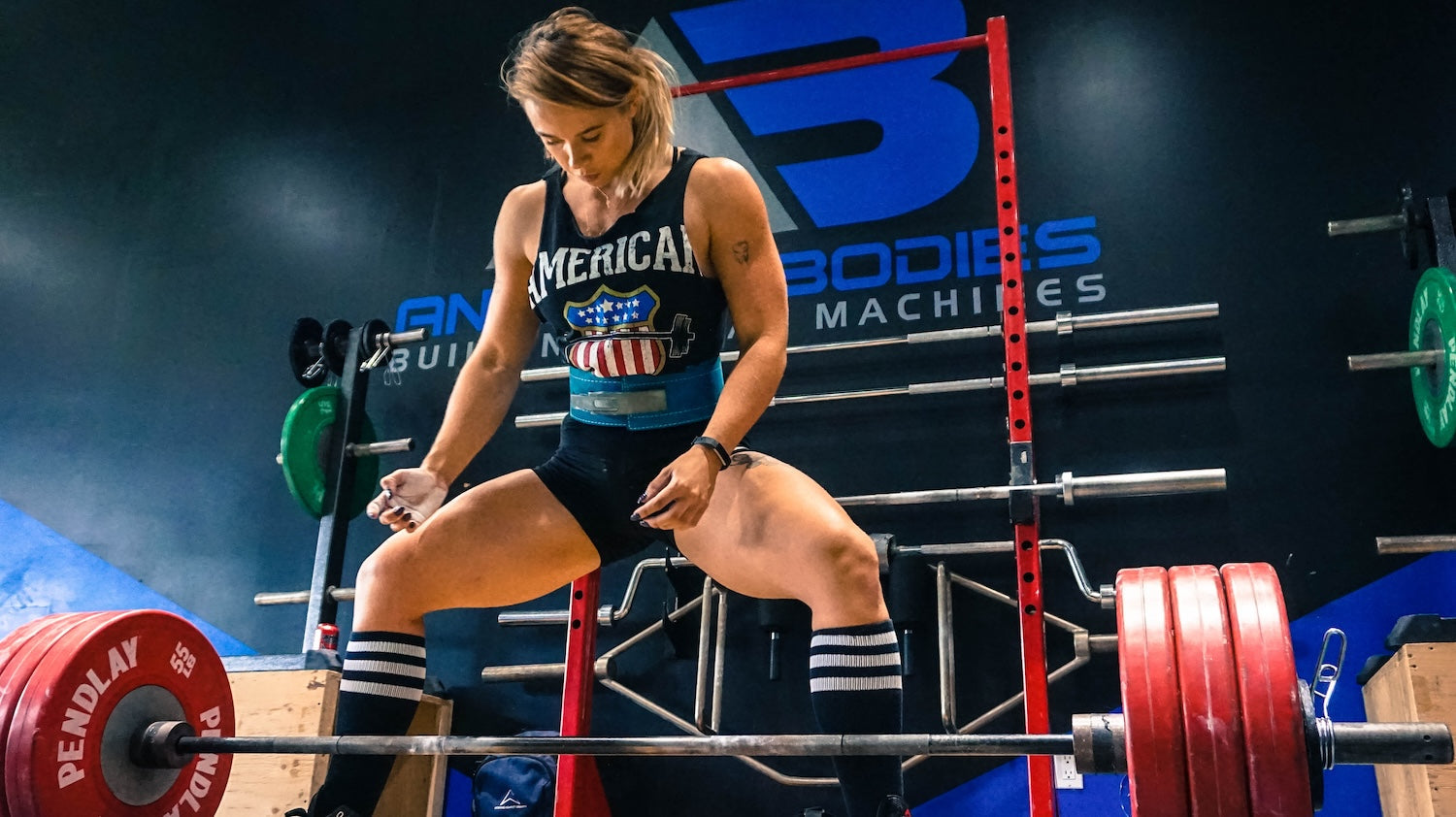
The strongest and most muscular people built their physiques using free-weights.
Machines have existed for decades. If they were superior, elite lifters would rely on them more.
They don’t.
They use machines as assistance—not as the foundation.
I’M NOT AGAINST MACHINES…
Machines are not useless. They can provide similar hypertrophy.
They also have benefits:
- Less psychologically demanding
- Safer to train to failure
- Useful for deload phases
They are tools—not replacements.
I’M AGAINST DOGMATIC TRAINING GURUS
Fitness culture often promotes extremes.
Everything is either “optimal” or “useless.”
The truth is usually in the middle.
The best method depends on the individual and the context.
But nuance doesn’t sell.
ADVANTAGES OF THE BARBELL AND FREE-WEIGHTS
Even though hypertrophy results are similar, free-weights offer unique advantages:
- More variety: One barbell allows many exercises.
- Motor skill development: You learn coordination and technique.
- Greater CNS development: Higher demand leads to long-term adaptation.
- Higher calorie expenditure: More muscles involved.
- Better transfer to real performance: More functional movements.
In real-world training, the strongest athletes rely primarily on free-weights.
CONCLUSION: WHY FREE-WEIGHTS SHOULD REMAIN THE FOUNDATION
Machines have their place and can complement a program.
But free-weights should remain the backbone of serious training.
A barbell and dumbbells have built more muscle and strength than machines ever have.
They develop coordination, resilience, and real-world strength.
If your goal is to build a strong, capable body—free-weights are unmatched.
Machines can assist—but they should never replace the basics.
Master the barbell, and you’ll build a physique that stands the test of time.
REFERENCES
1. Haugen ME et al. (2023). No hypertrophy difference; strength is modality-specific.
2. Heidel J et al. (2022). No difference in hypertrophy; specificity matters.
3. Hernández-Belmonte A et al. (2023). Equal effectiveness for strength and size.
4. Schwanbeck S et al. (2020). Similar growth; strength depends on modality.
5. Aerenhouts D et al. (2020). Comparable results across methods.
6. Rossi FE et al. (2018). Strength transfers are exercise-specific.