
Most nutrition plans fail for one simple reason:
They were never designed for real life.
They assume you have unlimited time to cook, prepare meals, track calories, and organize your week around your nutrition.
But most active adults are juggling careers, family responsibilities, children’s activities, and training sessions on top of everything else.
When life gets busy, nutrition often becomes an all-or-nothing game. People eat perfectly for a few days, get overwhelmed, and eventually abandon the plan altogether.
The truth is that lasting results rarely come from perfection.
They come from consistently doing the things that matter most.
That’s the idea behind the 80/20 approach.
Instead of focusing on every nutritional detail, focus on the few habits that deliver the majority of the results.
Start With Protein
For adults who train several times per week, protein should be the foundation of the diet.
It supports muscle recovery, helps preserve lean mass, improves satiety, and becomes increasingly important as we get older.
A practical target for most active adults is between 0.7 and 1.0 grams of protein per pound of goal bodyweight per day.
For example, someone whose goal weight is 180 pounds should aim for approximately 125 to 180 grams of protein daily.
That may sound like a lot, but it becomes manageable when protein is included at every meal.
Eggs at breakfast. Chicken, fish, or lean meat at lunch and dinner. Greek yogurt, cottage cheese, or a protein shake when convenience is needed.
You don’t need to obsess over every gram, but having a general target gives your nutrition direction.
Build Meals Around the Basics
Many people overcomplicate healthy eating.
In reality, most meals can be built around three simple components:
A quality protein source, a fruit or vegetable, and a carbohydrate source that supports your activity level.
Think grilled chicken, rice, and vegetables.
Greek yogurt with berries and granola.
Salmon, potatoes, and a salad.
Simple meals like these provide the nutrients needed to support training, recovery, and overall health without requiring elaborate meal plans.
Perhaps most importantly, they’re meals that the whole family can enjoy.
One of the biggest mistakes busy parents make is trying to prepare separate meals for themselves and their children. The more complicated the system becomes, the harder it is to sustain.
The best nutrition plan is often the one that works for everyone around the table.
Hydration Matters More Than Most People Think
Fatigue, headaches, poor concentration, and reduced training performance are often blamed on stress or lack of sleep.
Sometimes the problem is much simpler.
Many adults simply don’t drink enough water throughout the day.
A good starting point is to consume approximately half your bodyweight in ounces of water daily (or 30ml per ounces).
A 180-pound adult would aim for around 90 ounces per day (or 2.7 liters).
If you’re training regularly, working outdoors, or sweating heavily, your needs may be higher.
Hydration isn’t glamorous, but it remains one of the simplest ways to improve daily energy and exercise performance.
Leave Room for Real Life
No one eats perfectly all year.
There will be birthday parties, vacations, pizza nights, holidays, and last-minute dinners between hockey practice and evening commitments.
That’s not failure.
That’s life.
The goal is for most of your choices to support your health and performance goals most of the time.
When roughly 80% of your nutrition comes from quality foods and sound habits, the remaining 20% can provide flexibility without compromising your progress.
In fact, flexibility is often what makes consistency possible.
Where Supplements Fit
Supplements should never replace healthy eating habits, but they can help fill practical gaps.
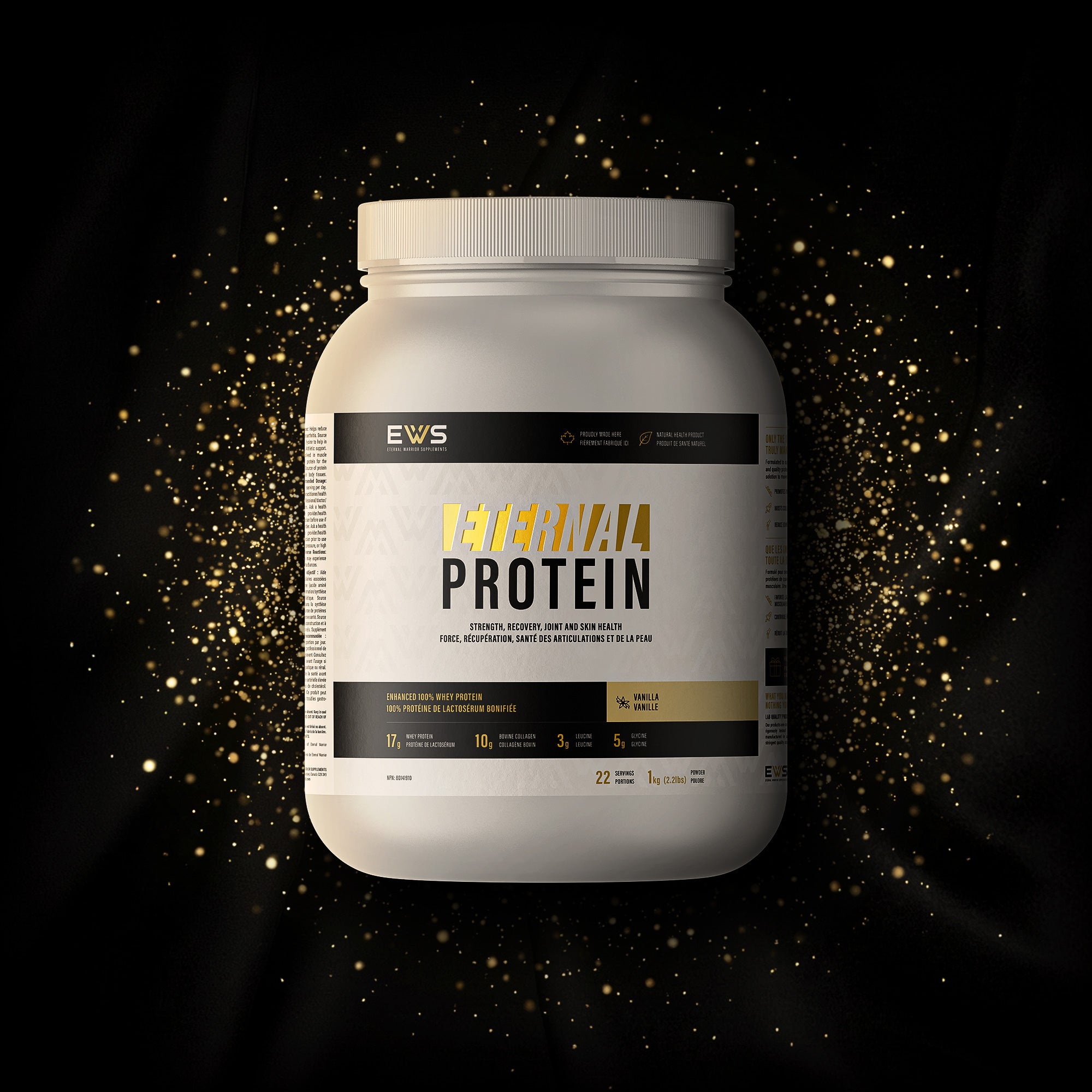
For active adults, a quality protein powder can be a convenient way to increase daily protein intake when schedules become hectic. Other supplements may help support recovery, performance, or overall health depending on individual needs and goals.
The key is to view supplements as tools that support a solid foundation—not as substitutes for one.
The Bottom Line
If you’re an active adult balancing work, family, and training, you don’t need a perfect nutrition plan.
You need a realistic one.
Focus on eating enough protein, building simple meals around whole foods, staying hydrated, and being consistent more often than not.
Because long-term results aren’t built during your best days.
They’re built during the busy weeks when life gets complicated and you still manage to do the basics well.
*DISCLAIMER*
The content shared by EW is designed to educate and inform active adults about nutrition, supplementation, and healthy aging. It is not intended to diagnose, treat, cure, or prevent any disease, nor should it replace personalized medical advice. If you have a medical condition or specific health concerns, consult a qualified healthcare professional before implementing any nutritional or supplementation strategies discussed in this article.